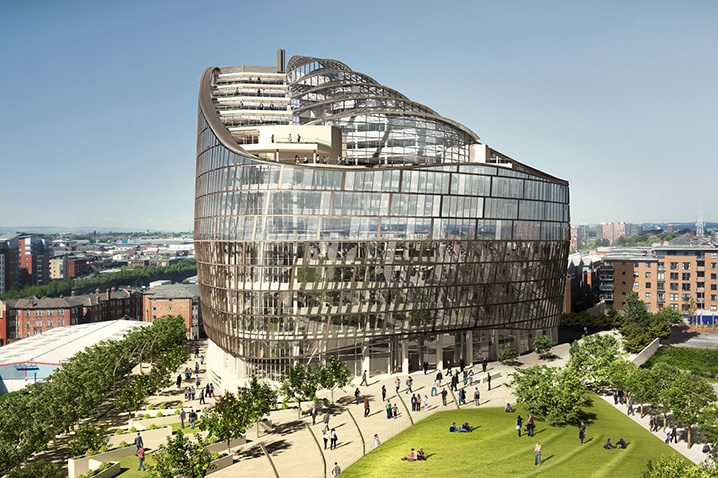
BREEAM has become the de facto measure or standard for the environmental performance of buildings in the UK. BREEAM is an holistic assessment scheme that sets best practice standards for the environmental performance of buildings through the design, specification, construction and operation phases.
Although voluntary, a number of UK Government departments and other public bodies either require or encourage the use of BREEAM. This includes the Government’s minimum standards for the procurement of public projects, the Welsh Assembly Government, the Northern Ireland Executive, UK health authorities and the Department for Education. Many private sector clients and developers also use BREEAM to deliver sustainable buildings. In addition, some Local Authorities may also stipulate BREEAM certification either as part of their local plan or a specific planning condition imposed on developments.
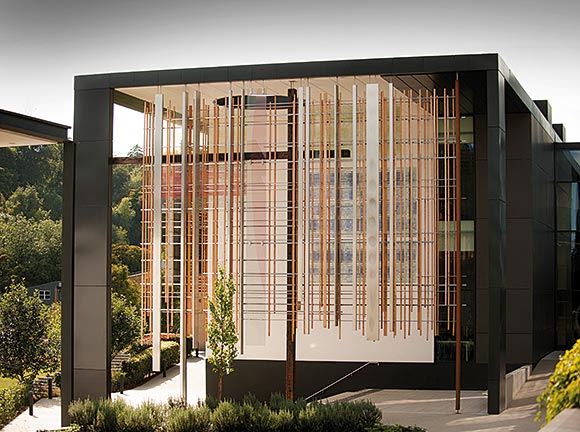
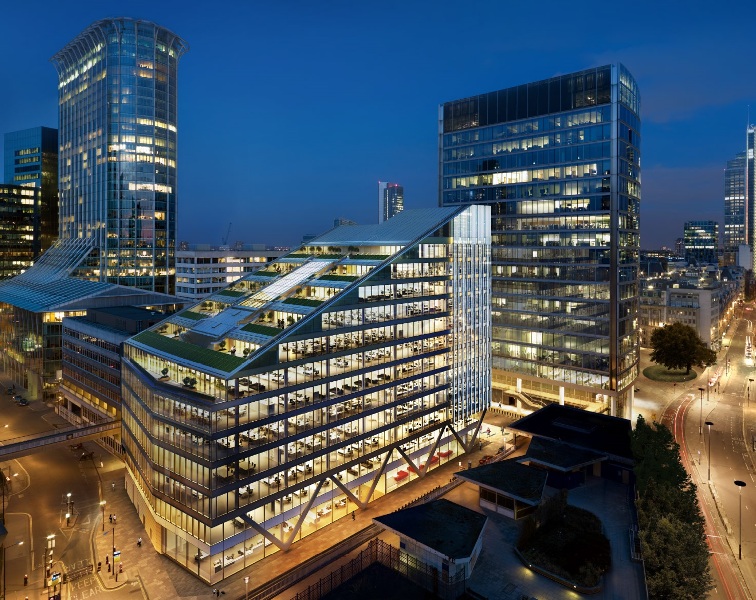
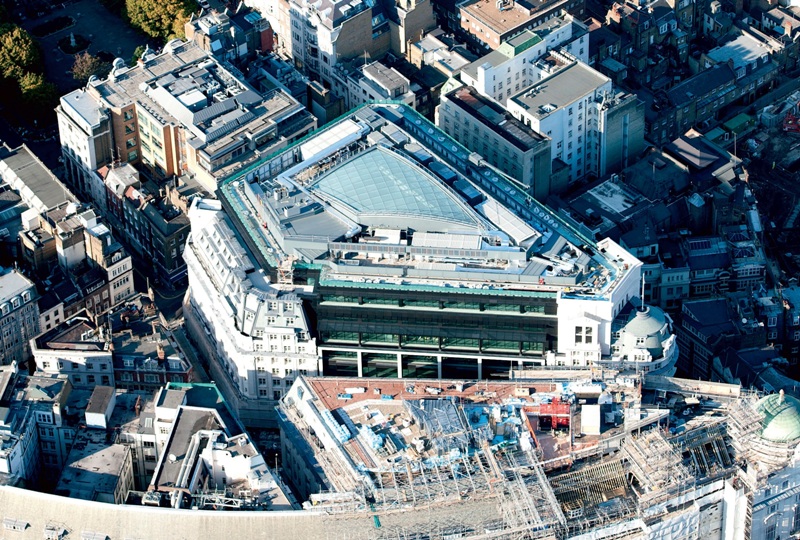
This article describes BREEAM new construction scheme and how it is applied to non-domestic buildings, explains how construction materials are assessed under BREEAM and gives examples of BREEAM ‘Excellent and ‘Outstanding’ steel-framed buildings.

What is BREEAM?
BREEAM (BRE Environmental Assessment Method) is the leading and most widely used environmental assessment method for buildings in the UK. It has been developed by the Building Research Establishment (BRE) has become the de facto measure of the environmental performance of UK buildings. Although currently voluntary, many publicly funded/procured buildings are required to be BREEAM assessed and reach a minimum BREEAM rating.
The BREEAM methodology is updated regularly; the current version for UK non-domestic new buildings is BREEAM UK New Construction[1], which was last updated in 2018. Separate BREEAM schemes are also available for communities, infrastructure, in-use and refurbishment and fit-out.
BREEAM is now used in more than 70 countries, with several in Europe having gone a stage further to develop country-specific BREEAM schemes operated by National Scheme Operators (NSOs). There are currently NSOs affiliated to BREEAM in:
- Netherlands – the Dutch Green Building Council operates BREEAM NL
- Spain – the Instituto Tecnológico de Galicia operates BREEAM ES
- Norway – the Norwegian Green Building Council operates BREEAM NOR
- Sweden – the Swedish Green Building Council operates BREEAM SE
- Germany – the German Institute for Sustainable Real Estate (DIFNI) operates BREEAM DE.
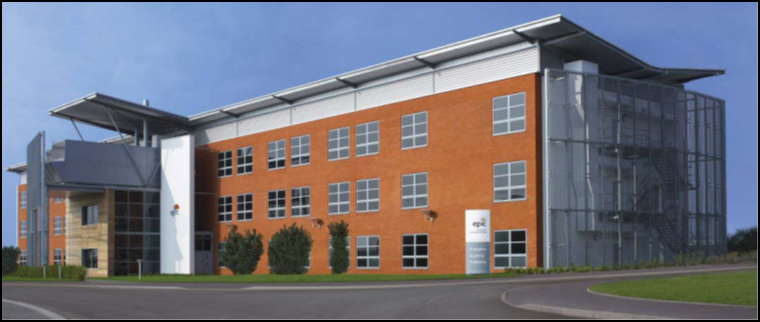
The aims, objectives and principles of BREEAM are embodied within a Core Standard owned and managed by BRE Global Limited. This Core Standard is applied to cover aspects of the built environment life through a suite of BREEAM Schemes.
The primary aim of BREEAM New Construction is to assess, encourage and reward environmental, social and economic sustainability throughout the built environment. This is achieved through integration and use of the scheme by clients and their project teams at key stages in the design and procurement process. This enables the client, through the BREEAM Assessor and the BRE certification process, to measure, evaluate and reflect the performance of their building against best practice in an independent and robust manner.
Buildings assessed under BREEAM are awarded credits according to their predicted and actual performance, against 47 individual assessment issues within a range of nine environmental categories: management, energy, health and wellbeing, pollution, transport, land use and ecology, materials and water. Each issue addresses a specific building related environmental impact or issue and has a number of ‘credits’ assigned to it. Credits are awarded where a building demonstrates that it meets the performance levels defined for that issue in the BREEAM 2018 New Construction scheme document[1].
The number of ‘credits’ available for each individual assessment issue varies and generally the higher the number there are for a given issue, the more important that issue. Many credits are assessed using bespoke assessment tools and calculators developed by the BRE.
Credits are either mandatory, i.e. must be achieved for compliance, or voluntary. In addition, there are innovation credits which encourage exemplar performance or which recognise a building that innovates in the field of sustainable performance. The BREEAM 2018 New construction credits are summarised in the table.
|
Energy |
Water |
Waste |
|---|---|---|
|
Reduction of energy use and CO2 emissions |
Water consumption |
Construction waste management |
|
Energy monitoring |
Water monitoring |
Use of recycled and sustainably sourced aggregate |
|
External lighting |
Water leak detection |
Operational waste |
|
Low carbon design |
Water efficient equipment |
Speculative finishes |
|
Energy efficient cold storage |
Adaption to climate change |
|
|
Energy efficient transportation systems |
Design for disassembly and adaptability |
|
|
Energy efficient laboratory systems |
||
|
Energy efficient equipment (process) |
||
|
Transport |
Materials |
Land use and ecology |
|
Transport assessment and travel plan |
Environmental impacts from construction products - Building LCA |
Site selection |
|
Sustainable transport measures |
Environmental impacts from construction products - EPD |
Ecological risks and opportunities |
|
Responsible sourcing of materials |
Managing negative impacts on ecology |
|
|
Insulation |
Ecological change and enhancement |
|
|
Designing for durability and resilience |
Long term ecology management and maintenance |
|
|
Material efficiency |
||
|
Health and wellbeing |
Pollution |
Management |
|
Visual comfort |
Impact of refrigerants |
Project brief and design |
|
Indoor air quality |
Local air quality |
Life cycle cost and service life planning |
|
Safe containment in laboratories |
Flood and surface water management |
Responsible construction practices |
|
Thermal comfort |
Reduction of night-time light pollution |
Commissioning and handover |
|
Acoustic performance |
Reduction of noise pollution |
Aftercare |
|
Security |
||
|
Safe and healthy surroundings |
Credits achieved are weighted according to environmental category and then summed to produce a single overall score on a scale of Unclassified, Pass, Good, Very Good, Excellent and Outstanding.
Although voluntary, a number of Government departments and other public bodies either require or encourage the use of BREEAM. These include the Welsh Assembly Government, the Northern Ireland Executive, UK health authorities and the Department for Education. Many private sector clients and developers also use BREEAM to deliver sustainable buildings.
Building projects are assessed by registered BREEAM assessors and reviewed by a third party (BRE) before being awarded a certificate. Since 2008 it has been compulsory to undertake a ‘Post Construction Review’ to confirm that the ‘as built’ information correlates with the design information.
The Design Stage (DS) assessment and interim certified BREEAM rating confirms the building’s performance at the design stage of the life cycle. The Post Construction Stage (PCS) assessment and BREEAM rating confirms the final ‘as-built’ performance of the building at the new construction stage of the life cycle. A final PCS assessment is completed and certified after practical completion of the building works.
The BREEAM certificate, issued by the National Scheme Operator (NSO - BRE Global in the UK), provides formal verification that the Assessor has completed an assessment of a building in accordance with the requirements of the scheme and its quality standards and procedures. A BREEAM certificate therefore provides assurance to any interested party that a building’s BREEAM rating, at the time of certification, accurately reflects its performance against the BREEAM standard.
All BREEAM assessed and certified buildings are listed on Green Book Live (along with a directory of licensed BREEAM Assessors).
Anyone wishing to verify the BREEAM rating of a building can do so by either checking a building’s BREEAM certificate, which will contain the certification mark or by searching Green Book Live for a specific listing.
BREEAM scoring
The BREEAM rating benchmarks for new UK construction projects assessed using the 2018 version of BREEAM are as follows:
|
BREEAM rating |
% score |
|---|---|
|
Outstanding |
= 85 |
|
Excellent |
= 70 |
|
Very Good |
= 55 |
|
Good |
= 45 |
|
Pass |
= 30 |
|
Unclassified |
< 30 |
The BREEAM rating benchmark levels enable a client and other stakeholders to compare an individual building’s performance with other BREEAM rated buildings and the typical sustainability performance of new non-domestic buildings in the UK.
BRE claims that each BREEAM rating level broadly represents performance equivalent the following measures although there is no published evidence to substantiate this:
- Outstanding: Less than top 1% of UK new non-domestic buildings (innovator)
- Excellent: Top 10% of UK new non-domestic buildings (best practice)
- Very Good: Top 25% of UK new non-domestic buildings (advanced good practice)
- Good: Top 50% of UK new non-domestic buildings (intermediate good practice)
- Pass: Top 75% of UK new non-domestic buildings (standard good practice)
Minimum standards
Although BREEAM was designed to be a flexible scoring system in which different credits could be ‘traded’, since 2008 BREEAM has included minimum standards of performance in some key areas.To achieve a particular BREEAM rating, the minimum overall percentage score must be achieved and compliance must be shown with the minimum standards shown in the table.
|
BREEAM issue |
Minimum standards by BREEAM rating level |
||||
|---|---|---|---|---|---|
|
Pass |
Good |
Very Good |
Excellent |
Outstanding |
|
|
Man 03: Responsible construction processes |
None |
None |
None |
One credit |
One credit |
|
Man 04: Commissioning and handover |
None |
None |
One credit |
One credit |
One credit |
|
Man 04: Commissioning and handover |
None |
None |
Criterion 11 |
Criterion 11 |
Criterion 11 |
|
Man 05: Aftercare |
None |
None |
None |
One credit |
One credit |
|
Ene 01: Reduction of energy use and CO2 emissions |
None |
None |
None |
Four credits |
Six credits |
|
Ene 02: Energy monitoring |
None |
None |
One credit |
One credit |
One credit |
|
Wat 01: Water consumption |
None |
One credit |
One credit |
One credit |
Two credits |
|
Wat 02: Water monitoring |
None |
Criterion 1 only |
Criterion 1 only |
Criterion 1 only |
Criterion 1 only |
|
Mat 03: Responsible sourcing of construction products |
Criterion 1 only |
Criterion 1 only |
Criterion 1 only |
Criterion 1 only |
Criterion 1 only |
|
Wst 01: Construction waste management |
None |
None |
None |
None |
One credit |
|
Wst 03: Operational waste |
None |
None |
None |
One credit |
One credit |
BREEAM uses a weighting system derived from a combination of consensus based weightings and ranking by a panel of experts, to weight the scores achieved in each of the nine environmental categories. Different weightings are applied depending on the scope of the assessment, i.e. shell only, shell and core only and fully fitted out. The weightings for a 'Fully fitted out' building are shown in the table.
|
Environmental section |
Weighting (%) |
|---|---|
|
Management |
11 |
|
Health & Wellbeing |
14 |
|
Energy |
16 |
|
Transport |
10 |
|
Water |
7 |
|
Materials |
15 |
|
Waste |
6 |
|
Land Use & Ecology |
13 |
|
Pollution |
8 |
|
Total |
100 |
|
Innovation (additional) |
10 |
The table below shows an example of how the scores in the nine BREEAM sections are aggregated to produce a final BREEAM score which, in this case, translates into a BREEAM rating of Very Good, i.e. a final BREEAM score >55.
|
BREEAM section |
Credits achieved |
Credits available |
% of credits achieved |
Section weighting |
Section score |
|---|---|---|---|---|---|
|
Management |
14 |
21 |
66.67 |
0.11 |
7.33 |
|
Health & Wellbeing |
12 |
22 |
54.55 |
0.14 |
7.64 |
|
Energy |
15 |
31 |
48.39 |
0.16 |
7.74 |
|
Transport |
8 |
12 |
66.67 |
0.10 |
6.67 |
|
Water |
4 |
10 |
40.00 |
0.07 |
2.80 |
|
Materials |
8 |
14 |
57.14 |
0.15 |
8.57 |
|
Waste |
3 |
6 |
50.00 |
0.06 |
3.00 |
|
Land Use & Ecology |
5 |
10 |
50.00 |
0.13 |
6.50 |
|
Pollution |
8 |
12 |
66.67 |
0.08 |
5.33 |
|
Innovation |
2 |
10 |
20.00 |
0.10 |
2.00 |
|
Final BREEAM score |
57.58 |
||||
|
BREEAM rating||Very Good |
Innovation credits
BREEAM first introduced innovation credits in 2008. The aim of innovation credits is to support and encourage innovation in construction. An additional 1% can be added to the overall building score for each innovation credit; up to maximum of 10 credits, i.e. 10%.
Innovation credits can be awarded in two ways:
- By meeting exemplary performance criteria defined within an existing BREEAM issue i.e. going beyond the standard BREEAM assessment criteria and therefore best practice. Only some assessment issues have exemplary performance criteria.
- By application to BREEAM to have a particular building technology or feature, design or construction method or process recognised as ‘innovative’. If the application is successful and subsequently building compliance is verified, an ‘innovation credit’ can be awarded.
Material assessment within BREEAM
Under BREEAM, construction materials are assessed under the five issues shown.
|
Issue |
Description |
Credits available |
|---|---|---|
|
Mat 01 |
Environmental impacts from construction products - Building life cycle assessment (LCA) Life cycle impacts |
Up to 7 |
|
Mat 02 |
Environmental impacts from construction products - Environmental Product Declarations (EPD) |
1 |
|
Mat 03 |
Responsible sourcing of construction products |
4 |
|
Mat 05 |
Designing for durability and resilience |
1 |
|
Mat 06 |
Material efficiency |
1 |
The only minimum standard under the Material section of BREEAM 2018 is for Mat 03 (Responsible sourcing of materials) where Criterion 1 is required for all BREEAM rating levels.
Further information on the assessment of materials under BREEAM is available in the Materials section of the BREEAM 2018 UK New Construction Technical Manual[1].