Humans have been making iron and steel for centuries. Steel fuelled the Industrial Revolution and remains the backbone of modern industrialised economies. It is difficult to imagine a world without steel – whether in buildings, bridges, vehicles, energy infrastructure, machinery or consumer products, steel continues to underpin almost every aspect of modern life.
Steel's versatility, in terms of its composition, mechanical properties, strength-to-weight ratio and durability, together with its unique ability to be repeatedly recycled without loss of quality, has been instrumental in its continuing success. Today, steelmaking itself is undergoing its biggest transformation since the introduction of the Basic Oxygen Steelmaking process, driven by the need to reduce greenhouse gas emissions. Alongside traditional blast furnace production and scrap-based electric arc furnaces, new technologies based on Direct Reduced Iron (DRI), hydrogen and renewable electricity are being developed to produce lower-carbon steel while maintaining the high performance required for structural applications.
This article explains the principal methods used to manufacture iron and steel, including both conventional and emerging low-carbon production routes. Separate articles describe how steel is converted into construction products and the material properties that make steel particularly suited to structural applications.
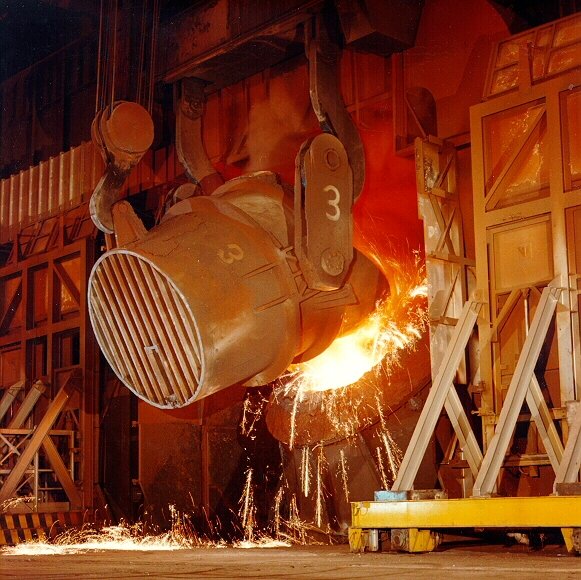
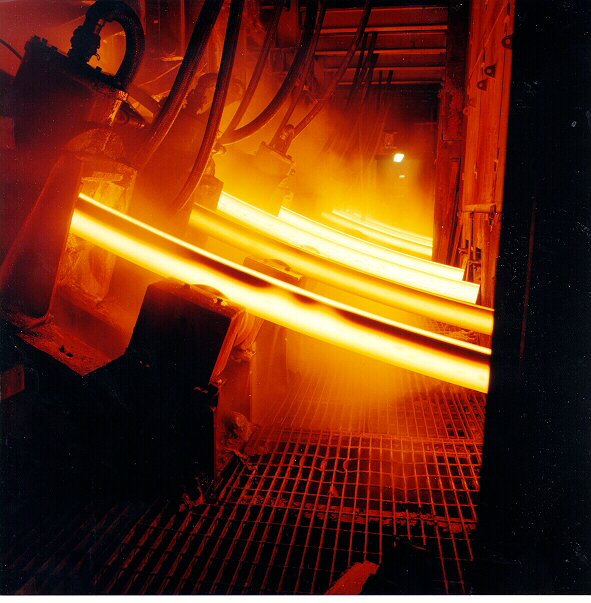
History of steelmaking
Early civilisations were using naturally occurring iron, including iron recovered from meteorites, more than 6,000 years ago to produce simple tools and weapons. The first iron furnaces appeared around 1400 BC. These consisted of small hearths in which iron ore and charcoal were heated to produce a spongy mass of iron that could be hammered to remove impurities. As metalworking techniques developed, it was discovered that reheating iron and carefully controlling its carbon content produced a much stronger and more versatile material – steel.
Small quantities of crude steel were first produced in eastern Africa and India as early as 300 BC. Steelmaking techniques were subsequently developed in China, the Middle East and Europe, with gradual improvements in furnace design and refining methods allowing larger quantities of higher-quality steel to be produced.
The Industrial Revolution transformed steel from a specialist material into the foundation of modern engineering. Growing demand for railways, bridges, ships, machinery and buildings drove the development of increasingly efficient manufacturing processes. In 1855, Henry Bessemer patented his revolutionary steelmaking process, in which air was blown through molten iron to remove excess carbon and other impurities. This allowed steel to be produced rapidly, consistently and on an industrial scale, dramatically reducing costs and enabling widespread use in construction and manufacturing.
The Bessemer process was followed by the Siemens-Martin open-hearth process and, during the second half of the twentieth century, by the Basic Oxygen Steelmaking (BOS) process and the Electric Arc Furnace (EAF). These remain the two dominant steelmaking routes used throughout the world today, although their relative importance varies considerably between countries depending on the availability of iron ore, scrap steel, energy and infrastructure.
Steelmaking is now entering another period of major technological change. The need to reduce greenhouse gas emissions has accelerated the development of new production routes based on Direct Reduced Iron (DRI), hydrogen and renewable electricity, together with improvements to conventional blast furnace technology and increased recycling of steel scrap. These technologies are expected to play a central role in achieving the steel industry's net zero ambitions while continuing to supply the wide range of steels required by modern construction and manufacturing.
Modern iron making
Iron is produced by reducing iron ore to metallic iron. Traditionally this has been carried out in a blast furnace using coke as both the fuel and reducing agent. Although this remains the dominant method of primary iron production worldwide, ironmaking is undergoing significant technological change as the industry seeks to reduce carbon emissions through improved process efficiency, increased use of alternative fuels and the introduction of new low-carbon production routes such as Direct Reduced Iron (DRI).
The principal raw materials for blast furnace ironmaking are iron ore, coke and fluxes. Iron ore is supplied as sinter, pellets or calibrated lump ore. Sinter is produced by heating fine iron ore with coke breeze and fluxes to form a porous clinker, improving permeability within the blast furnace and providing a consistent feedstock. Iron ore pellets, manufactured by agglomerating and firing fine ore concentrates, are increasingly used because of their high iron content, uniform size and suitability for both blast furnace and DRI processes.
Coke is produced by heating carefully selected grades of metallurgical coal in coke ovens in the absence of air. During this carbonisation process, volatile compounds are driven off, leaving a strong, porous carbon material capable of supporting the burden within the blast furnace while acting as both a fuel and reducing agent. The gases released during coking are recovered and used as fuel elsewhere on the steelworks, while valuable by-products including tar, benzene, ammonia and sulphur compounds are extracted for use in other industries.
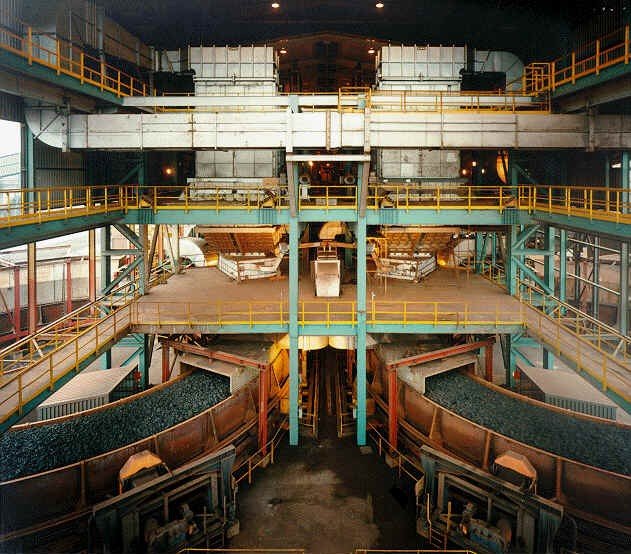
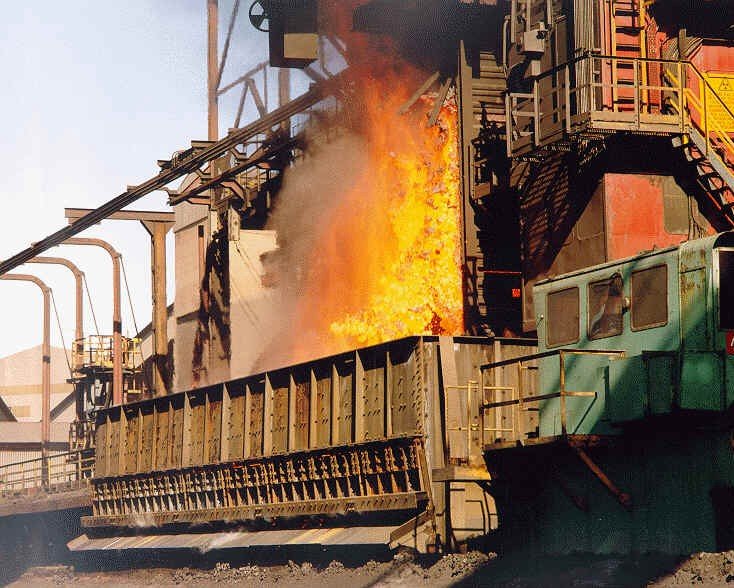
Coke, iron ore and fluxes, typically limestone or dolomite, are charged into the top of the blast furnace. Pre-heated air, often enriched with oxygen, is blown into the furnace through water-cooled nozzles known as tuyeres near its base. Temperatures within the furnace exceed 2,000°C, allowing carbon monoxide generated from the coke to reduce the iron oxides to molten iron. The fluxes combine with impurities in the ore to form a liquid slag, which floats on the surface of the molten iron and can be removed separately.
Modern blast furnaces also inject finely ground pulverised coal (PCI), and in some cases natural gas or other reducing agents, through the tuyeres to reduce coke consumption and improve efficiency. Research and industrial trials are increasingly investigating the use of sustainable biomass-derived carbon sources to partially replace fossil coke, helping to reduce the carbon footprint of conventional ironmaking.
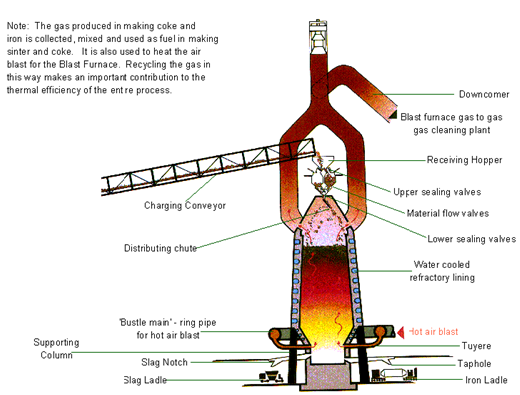
The blast furnace
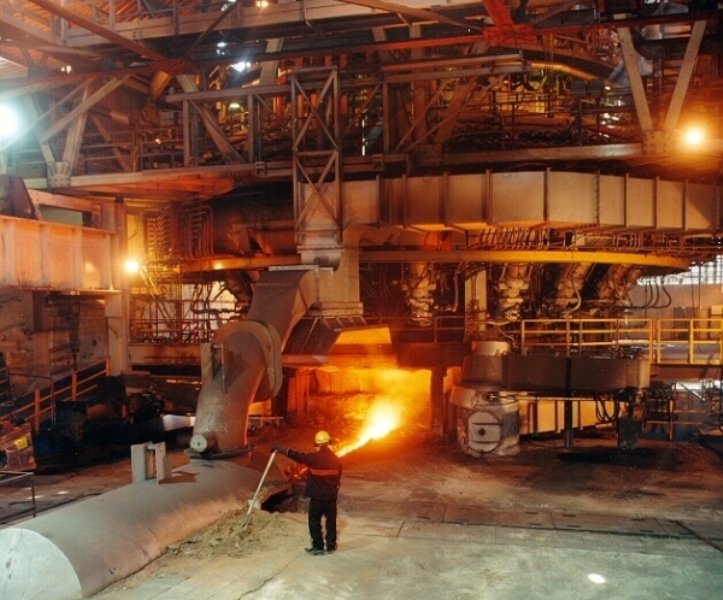
The charging system at the top of the furnace also acts as a gas seal, preventing furnace gases from escaping. These gases are recovered, cleaned and reused throughout the steelworks to generate heat and electricity, significantly improving overall energy efficiency. Molten iron accumulates in the hearth of the furnace and is periodically tapped into ladles for transfer to the steelmaking plant, while slag is removed through a separate taphole for subsequent processing and beneficial use.
Blast furnace ironmaking is a continuous process. Raw materials are charged continuously at the top while molten iron and slag are tapped at regular intervals. A blast furnace may operate continuously for 15 to 20 years before requiring a major reline of its refractory lining, with modern furnaces capable of producing several million tonnes of hot metal during a single campaign.
Although the blast furnace remains central to global steel production, significant investment is now being made to reduce its environmental impact. Improvements in process efficiency, greater use of recycled steel, carbon capture, utilisation and storage (CCUS), and the gradual introduction of hydrogen-based ironmaking are expected to play an increasingly important role as the steel industry transitions towards net zero carbon production over the coming decades.
Refining iron ore for the blast furnace
Making iron
Conversion to steel
The basic raw material for steel manufacture is either the hot metal from the blast furnace , steel scrap or a mixture of both. The proportions of material used vary according to the process and the type of steel required. Steel can be described in general terms as iron with most of the carbon removed, to make it tougher and more ductile . There are many forms (grades) of steel, each with its own specific chemical composition and properties to meet the needs of the many different applications. Two major steelmaking processes are used today in the UK.
The basic raw materials for steel manufacture are molten iron (hot metal) from the blast furnace, recycled steel scrap, Direct Reduced Iron (DRI), or combinations of these materials. The proportions used depend on the steelmaking route, the grade of steel being produced and the availability of raw materials. Steel is essentially an alloy of iron in which the carbon content and other alloying elements are carefully controlled to achieve the mechanical properties required for a particular application.
Modern steels are produced to demanding chemical composition and cleanliness requirements, allowing engineers to specify materials with precisely defined strength, toughness, weldability and durability. Whether intended for structural sections, reinforcing bar, automotive products, plate or engineering applications, steelmaking involves removing impurities and controlling the chemical composition to meet the required product specification.
Today, three principal steelmaking routes are used worldwide:
- Basic Oxygen Steelmaking (BOS), in which molten iron from a blast furnace is refined using high-purity oxygen.
- Electric Arc Furnace (EAF) steelmaking, which primarily melts recycled steel scrap, increasingly supplemented with Direct Reduced Iron (DRI) or Hot Briquetted Iron (HBI).
- Direct Reduced Iron (DRI) combined with Electric Arc Furnace steelmaking, an increasingly important low-carbon production route that uses natural gas or hydrogen to reduce iron ore before melting it in an electric arc furnace.
Each process offers different advantages in terms of productivity, raw material flexibility, product quality and carbon emissions. The choice of production route depends on factors including the availability of iron ore and scrap, electricity costs, energy infrastructure and the range of steel products being manufactured.
The following sections describe each of these steelmaking routes in more detail.
Basic oxygen steelmaking
Basic Oxygen Steelmaking (BOS) remains the principal production route at integrated steelworks and accounts for the majority of primary steel production worldwide. The process uses molten iron from the blast furnace together with recycled steel scrap to produce large quantities of steel efficiently and consistently.
Modern BOS converters typically produce between 250 and 350 tonnes of steel per heat, with the refining process taking approximately 15 to 20 minutes. Molten iron is charged into the converter together with carefully controlled quantities of steel scrap, which helps regulate the temperature of the process while increasing recycled content.
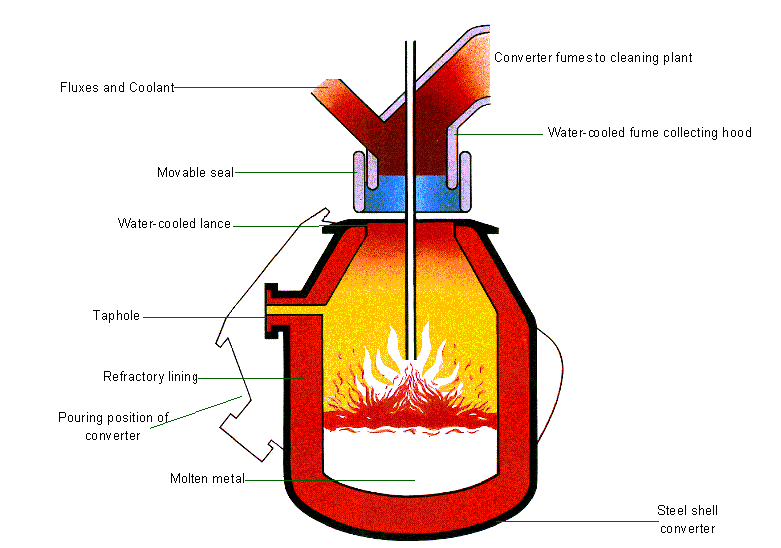
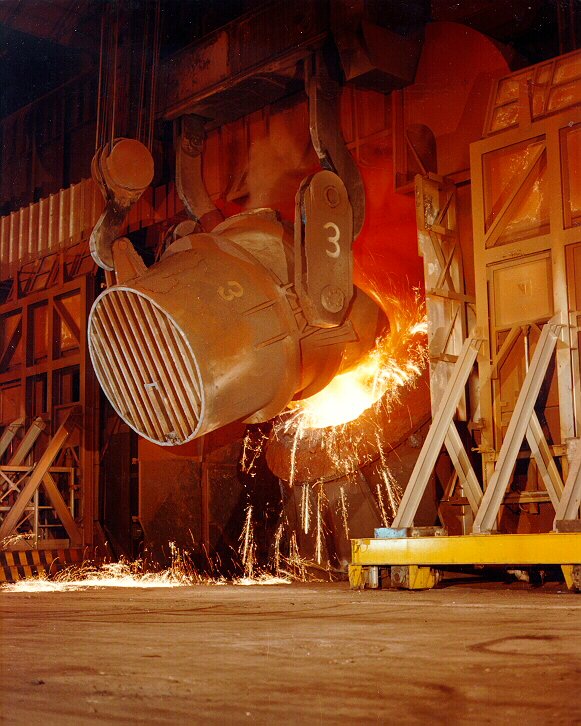
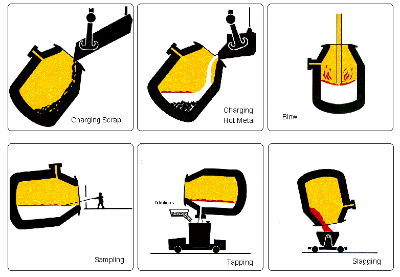
A water-cooled oxygen lance is lowered into the converter and high-purity oxygen is blown onto the surface of the molten metal at supersonic velocity. The oxygen reacts rapidly with carbon and other unwanted elements, including silicon, manganese and phosphorus. These oxidation reactions generate substantial heat, maintaining the molten state of the steel while reducing the carbon content to the required level.
Lime and other fluxes are added during the blow to combine with oxidised impurities, forming a liquid slag that floats on the surface of the steel. Modern converters also use inert gas stirring, typically with argon introduced through the base of the vessel, to improve mixing, enhance refining efficiency and promote more uniform chemical composition and temperature throughout the melt.
The gases produced during oxygen blowing contain large quantities of carbon monoxide. Rather than being released to atmosphere, these gases are recovered, cleaned and reused as fuel elsewhere within the integrated steelworks, improving overall energy efficiency and reducing fuel consumption. Retain the existing photographs showing scrap charging and hot metal charging.
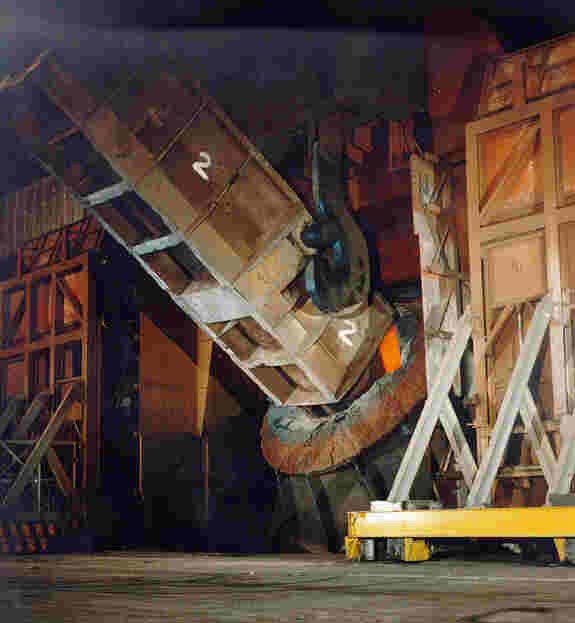
Throughout the refining process, samples are taken to verify both the temperature and chemical composition of the steel. Once the required specification has been achieved, the converter is tilted and the steel is tapped into a ladle. Alloying elements may be added during tapping or subsequently during secondary steelmaking to achieve the precise composition required for the final product.
After tapping, the remaining slag is removed separately for processing and recycling. Much of the recovered slag is subsequently used in construction applications or recycled within the steelworks.
Although Basic Oxygen Steelmaking relies on iron produced in the blast furnace and therefore has higher direct carbon emissions than scrap-based steelmaking, the process remains essential for producing large volumes of high-quality steel. Current developments focus on reducing emissions through greater use of recycled scrap, improved energy efficiency, carbon capture and storage technologies, and, in the longer term, replacing blast furnace iron with low-carbon iron produced using Direct Reduced Iron (DRI).
The BOS process
Electric Arc Furnace
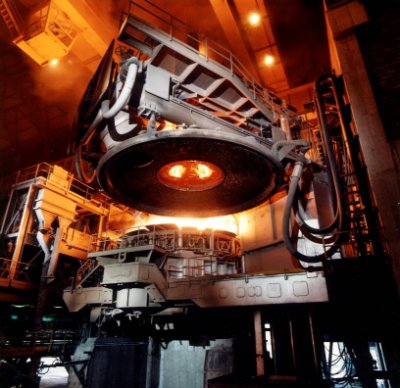
The Electric Arc Furnace (EAF) is the principal steelmaking process used by electric steelworks and is becoming increasingly important as the industry moves towards lower-carbon steel production. Traditionally, EAFs melted recycled steel scrap, but modern furnaces increasingly use carefully controlled mixtures of scrap, Direct Reduced Iron (DRI), Hot Briquetted Iron (HBI) and, in some cases, pig iron to achieve the chemical composition and product quality required for different steel grades.
Modern electric arc furnaces typically produce between 100 and 200 tonnes of steel per heat and can manufacture a wide range of products, including structural steels, reinforcing bar, engineering steels, alloy steels and stainless steels. Improvements in furnace design, process control and secondary metallurgy mean that EAF steel is now capable of meeting the demanding quality requirements of many structural and engineering applications.
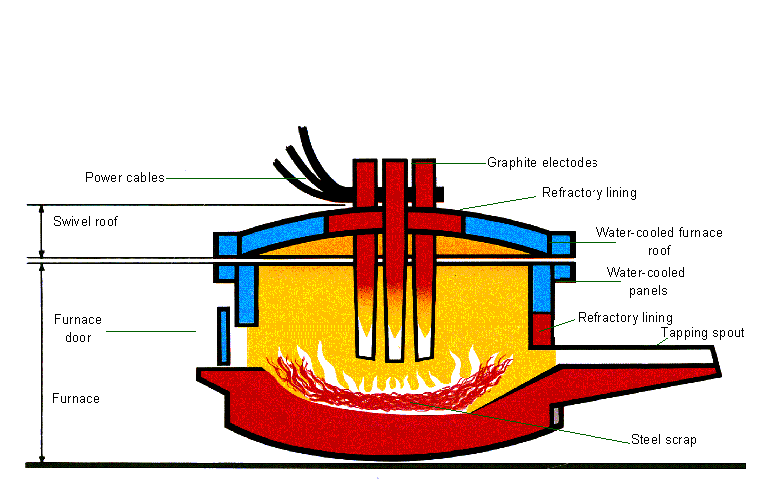
The electric arc furnace consists of a refractory-lined vessel with a removable roof through which three large graphite electrodes are lowered. At the start of each heat, the roof is swung clear and the furnace is charged with scrap steel and, where required, DRI or HBI using a large charging basket or continuous charging system. Once charging is complete, the roof is returned and the electrodes lowered into the furnace.
A powerful electric current passes through the graphite electrodes, generating an electric arc with temperatures exceeding 3,000°C. The intense heat rapidly melts the charge. Oxygen is injected to accelerate melting and remove unwanted elements, while lime and other fluxes are added to combine with impurities and form a protective slag. Modern furnaces may also employ oxy-fuel burners, carbon injection and foamy slag practices to improve thermal efficiency, reduce electricity consumption and protect the refractory lining.
Throughout the melting process, samples are taken to monitor the temperature and chemical composition of the steel. Once the required specification has been achieved, the furnace is tilted and the molten steel is tapped into a ladle for secondary steelmaking, where precise adjustments to composition and temperature are made before casting.
Unlike integrated blast furnace steelmaking, the EAF process relies primarily on electricity rather than coke as its principal energy source. Consequently, its overall carbon footprint depends largely on the source of electricity and the composition of the metallic charge. Where renewable or low-carbon electricity is used together with high recycled scrap contents, EAF steel can achieve significantly lower embodied carbon than conventional blast furnace production. The addition of DRI or HBI enables EAF steelmakers to produce high-quality steels while reducing dependence on premium-grade scrap.
The increasing availability of renewable electricity, together with advances in DRI production and secondary steelmaking, is making the EAF route central to the decarbonisation of the global steel industry. Many new steelmaking facilities under development combine hydrogen-ready DRI plants with electric arc furnaces, providing a pathway towards the production of low-carbon or "green" steel.
Earlier guidance sometimes suggested that specifying steel solely on the basis of its production route—for example, requiring steel produced from 100% scrap—would necessarily reduce environmental impact. Current understanding is more nuanced. The embodied carbon of steel depends on a range of factors including the production route, electricity source, raw material supply, transport, plant efficiency and product yield. Importantly, in a global context, while steel demand exceeds the constrained supply of scrap, there is no benefit in specifying scrap-based EAF steel this is explained in the IStructE guidance in the Resources section).
The Electric Arc Furnace (EAF)
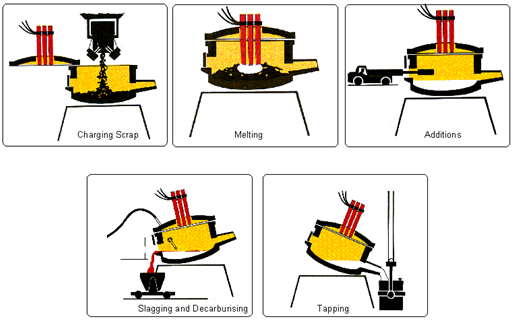
The main steps in the EAF process
Direct reduced iron
Direct Reduced Iron (DRI) is an increasingly important ironmaking process that offers a lower-carbon alternative to conventional blast furnace production. Unlike the blast furnace, where iron ore is melted using coke, the DRI process removes oxygen from iron ore in the solid state using a reducing gas. The resulting product, commonly known as sponge iron because of its porous structure, can then be melted in an Electric Arc Furnace (EAF) to produce steel.
The process uses high-grade iron ore pellets that are fed into a vertical shaft furnace. A hot reducing gas, traditionally produced from natural gas, flows upwards through the furnace, removing oxygen from the iron ore without melting it. The product leaving the furnace typically contains more than 90% metallic iron and retains the shape of the original pellets. Because the iron is not melted during reduction, the process requires significantly less energy than conventional blast furnace ironmaking.
DRI may be used directly in an adjacent Electric Arc Furnace or compressed into Hot Briquetted Iron (HBI) for easier storage and transport. HBI has a higher density than DRI and is less susceptible to re-oxidation, making it suitable for international shipment and long-term storage.
The use of DRI provides several advantages for steelmakers. It offers a consistent, low-residual source of iron that complements recycled scrap, allowing tighter control of steel chemistry and enabling the production of demanding structural, engineering and automotive steel grades. As the availability of high-quality scrap becomes increasingly constrained, DRI is expected to play an important role in maintaining steel quality while supporting increased recycling.
Traditionally, the reducing gas has been produced from natural gas, resulting in substantially lower carbon emissions than conventional blast furnace ironmaking. The next stage in the evolution of DRI is the replacement of natural gas with green hydrogen produced using renewable electricity. In hydrogen-based DRI plants, hydrogen reacts with the iron ore to produce metallic iron and water vapour rather than carbon dioxide, offering the potential for near-zero direct emissions from the ironmaking process.
Several large-scale hydrogen DRI plants are now under construction or entering commercial production, particularly in northern Europe, where abundant renewable electricity is available. These facilities combine hydrogen-based DRI production with Electric Arc Furnaces powered by renewable electricity to produce low-carbon steel suitable for a wide range of construction and engineering applications.
While blast furnace steelmaking will continue to play an important role for many years, Direct Reduced Iron is widely recognised as one of the key technologies required to decarbonise primary steel production. Many steel producers are therefore investing in DRI-EAF production routes as part of their transition towards net zero steelmaking.
Secondary steelmaking
After the molten steel has been tapped from the Basic Oxygen Steelmaking (BOS) converter or Electric Arc Furnace (EAF), it is frequently subjected to one or more additional refining operations before casting. Collectively known as secondary steelmaking or ladle metallurgy, these processes enable the steel to be refined to the precise chemical composition, temperature and cleanliness required for its intended application.
As the performance requirements for modern steels have become increasingly demanding, secondary steelmaking has become an essential part of almost all steel production. It allows steelmakers to produce the high standards of quality, consistency and reliability expected for structural, engineering, automotive and energy applications.
Secondary steelmaking may include a range of individual processes, depending on the steel grade being produced. These include ladle stirring using argon gas to improve mixing and temperature uniformity, the injection of alloying elements or fluxes in powder or wire form, vacuum degassing to remove dissolved hydrogen and nitrogen, and ladle furnace treatment, where electric arc heating is used to maintain the required casting temperature while final adjustments are made to the steel chemistry. High-performance steels often undergo several of these treatments before casting.
These refining operations improve the homogeneity of the steel, reduce harmful impurities and dissolved gases, and enable the precise control of alloying elements. They also promote the formation of clean, well-controlled non-metallic inclusions, which are important in achieving consistent mechanical properties, weldability, fatigue performance and toughness.
Modern secondary steelmaking relies heavily on advanced process control systems, real-time chemical analysis and automated alloy addition systems to ensure that each heat of steel meets increasingly demanding customer specifications. The ability to achieve consistent quality has become particularly important as steelmakers make greater use of recycled scrap and Direct Reduced Iron (DRI), both of which can introduce greater variability in raw materials than traditional blast furnace production.
Secondary steelmaking also plays an important role in improving manufacturing efficiency and sustainability. Precise control of chemistry and temperature reduces the need for reprocessing, improves casting performance and increases product yield, helping to reduce both energy consumption and material waste.
Secondary steelmaking
'Green Steel' technologies
The steel industry is undergoing one of the most significant technological transformations in its history as producers seek to reduce greenhouse gas emissions while continuing to supply the high-quality steels required by modern construction and manufacturing. Conventional blast furnace production remains essential to global steel supply, but a range of new technologies is being developed to reduce emissions across the entire steelmaking process. These developments are often collectively referred to as 'green steel' technologies.
One of the most important developments is the production of Direct Reduced Iron (DRI) using hydrogen instead of natural gas. In this process, hydrogen reacts with iron ore to produce metallic iron and water vapour, largely eliminating the carbon dioxide emissions associated with conventional ironmaking. When combined with Electric Arc Furnaces powered by renewable electricity, hydrogen-based DRI has the potential to reduce the embodied carbon of primary steel significantly.
Alongside hydrogen ironmaking, many existing integrated steelworks are improving the environmental performance of conventional blast furnace production through increased energy efficiency, greater use of recycled steel scrap, biomass-derived reducing agents, and carbon capture, utilisation and storage (CCUS). These technologies are expected to play an important role in reducing emissions during the transition to lower-carbon steelmaking.
Electric Arc Furnace steelmaking also continues to evolve. Modern EAF plants increasingly combine recycled scrap with Direct Reduced Iron (DRI) or Hot Briquetted Iron (HBI), enabling the production of high-quality steels while reducing dependence on virgin iron produced by blast furnaces. As electricity systems become increasingly decarbonised, the environmental performance of EAF steelmaking will continue to improve.
A number of steel producers have announced major investments in low-carbon steelmaking technologies. These include hydrogen-based DRI plants, renewable electricity-powered EAF facilities, and projects incorporating carbon capture at existing integrated steelworks. Although these technologies are at different stages of commercial deployment, together they represent the principal pathways towards achieving the steel industry's long-term net zero ambitions.
The environmental performance of steel depends on many factors, including the production route, electricity generation mix, raw material sourcing, transport and manufacturing efficiency. Consequently, the term "green steel" has no single internationally agreed definition. Increasingly, the environmental performance of steel products is demonstrated using independently verified Environmental Product Declarations (EPDs) and responsible sourcing certification schemes, allowing designers and clients to make informed comparisons based on transparent life-cycle data rather than production route alone.
The continuing development of low-carbon steelmaking technologies, together with improved recycling, renewable electricity and more efficient manufacturing processes, is expected to play a central role in supporting the transition towards a more sustainable construction industry while maintaining the structural performance, durability and recyclability for which steel is recognised.
Iron and steel making by-products
As with all large-scale manufacturing processes, the production of iron and steel generates a range of by-products. However, modern steelmaking is increasingly based on the principles of the circular economy, with many of these materials being recovered and reused rather than treated as waste. Today, the majority of by-products generated during iron and steel production are either recycled within the steelworks or used beneficially in other industries, helping to conserve natural resources and reduce the environmental impact of manufacturing.
On average, the production of one tonne of crude steel generates approximately 200 kg of by-products from Electric Arc Furnace (EAF) steelmaking and up to 400 kg from integrated blast furnace and Basic Oxygen Steelmaking (BF-BOS) production. The principal by-products are slags, dusts, sludges and process gases, all of which have established recovery and recycling routes.
Slags account for around 90% of all iron and steelmaking by-products. Blast furnace slag is produced during ironmaking as fluxes combine with impurities removed from the iron ore. Depending on the cooling process employed, blast furnace slag may be produced as air-cooled, granulated or pelletised material, each having different engineering properties and applications.
Air-cooled blast furnace slag is hard and durable, making it suitable for use as construction aggregate, road bases, asphalt, railway ballast and general fill. Granulated blast furnace slag is rapidly quenched to form a glassy material which, when ground to produce Ground Granulated Blast Furnace Slag (GGBS), is widely used as a supplementary cementitious material in concrete. The use of GGBS can significantly reduce the embodied carbon of concrete while improving long-term durability and resistance to aggressive environments. Pelletised or expanded slag has a lightweight cellular structure and is used principally as lightweight aggregate and insulation products.
Steelmaking slags produced during Basic Oxygen Steelmaking and Electric Arc Furnace operations are also widely recovered. Their composition varies according to the steelmaking process and steel grade, but they are commonly used in road construction, civil engineering works, earthworks and, where appropriate, recycled internally within the steelmaking process to recover valuable metallic content and reduce raw material consumption.
Process gases generated during coke making, blast furnace ironmaking and Basic Oxygen Steelmaking contain significant quantities of recoverable energy. After cleaning, these gases are reused throughout the steelworks as fuel for reheating furnaces, boilers and power generation, substantially improving overall energy efficiency. Modern integrated steelworks recover and utilise the vast majority of these process gases, reducing both energy costs and greenhouse gas emissions.
Dusts and sludges are collected by the environmental control systems fitted to ironmaking, steelmaking and rolling processes. These materials contain valuable iron units together with other metals and are increasingly recycled back into the production process where technically and economically feasible. Materials that cannot be recycled internally may be processed for recovery of metals or supplied to other industries for specialist applications.
The steel industry continues to develop new methods of recovering and valorising by-products as part of its transition towards more sustainable manufacturing. Research is also underway to recover critical raw materials from steelmaking residues and to further increase recycling rates, supporting resource efficiency and reducing reliance on primary raw materials.
Overall, the beneficial use of iron and steelmaking by-products plays an important role in reducing waste, conserving natural resources and lowering the environmental impact of both steel production and the wider construction industry.
Casting steel
Before molten steel can be rolled or formed into finished products, it must first solidify into standard semi-finished products known as billets, blooms, beam blanks or slabs. These semi-finished products are subsequently reheated and rolled into the wide range of steel products used by the construction, engineering and manufacturing industries.
Historically, molten steel was poured into individual ingot moulds, where it solidified before being reheated in soaking pits and rolled into the required shapes. Although ingot casting is still used for a limited number of specialist steels and very large forgings, the vast majority of steel is now produced using continuous casting, which offers significant improvements in quality, productivity and material yield.
The dimensions of the cast product depend upon its intended application. Billet casters typically produce square or round sections between approximately 80 mm and 175 mm across for the manufacture of bars, wire rod and small structural products. Bloom casters produce larger (300 to 400 mm) square or rectangular sections that are subsequently rolled into heavy sections, rails and other structural products. Beam blank casters produce characteristic dog-bone shaped sections that can be rolled efficiently into I and H sections, while slab casters produce wide rectangular slabs used for plate, strip and sheet production.
Continuous casting
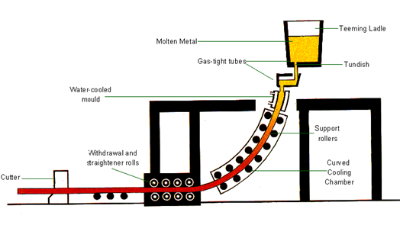
Continuous casting is now the standard process used throughout the steel industry because it provides improved product quality, greater manufacturing efficiency and significantly higher material yield than traditional ingot casting. The process also eliminates the need for primary rolling mills, soaking pits and large numbers of reusable ingot moulds, reducing both energy consumption and manufacturing costs.
In the continuous casting process, molten steel is transported from the steelmaking plant in a ladle and positioned above the casting machine using an overhead crane. Before casting begins, the steel may undergo final treatments, including argon stirring and temperature adjustment, to ensure consistent composition and cleanliness.
The molten steel flows through a refractory shroud into an intermediate reservoir known as the tundish, which provides a constant and carefully controlled supply of steel to one or more water-cooled copper moulds. The use of enclosed refractory shrouds helps minimise contact with the atmosphere, reducing oxidation and improving steel cleanliness.
As the steel passes through the mould, a solid outer shell forms while the centre remains molten. The partially solidified strand is continuously withdrawn from the mould through a series of support rollers and secondary cooling zones, where precisely controlled water sprays complete solidification. Modern casting machines employ advanced automation and process control systems to regulate casting speed, cooling rates and strand geometry, ensuring consistent product quality.
In many steelworks, electromagnetic stirring is also used during casting to improve the internal structure of the steel, reduce segregation and enhance surface quality. Combined with sophisticated monitoring systems, these technologies have significantly improved the consistency and reliability of continuously cast products.
Once fully solidified, the strand emerges horizontally from the casting machine and is automatically cut to the required lengths before being transferred for inspection and subsequent rolling. Sequence casting allows several ladles of the same steel grade to be cast consecutively without stopping the machine, further improving productivity and reducing manufacturing costs.
Today, continuous casting produces almost all structural steel products worldwide and is an essential part of modern steel manufacturing, delivering high-quality semi-finished products with excellent dimensional accuracy, reduced waste and improved production efficiency.
In the continuous casting process the molten metal is poured directly into a casting machine to produce billets, blooms or slabs. Continuous casting eliminates the need for primary and intermediate rolling mills, soaking pits and the storage and use of large numbers of ingot moulds. It also increases the yield of usable product from a given weight of steel and processes the steel into a semi-finished form nearer to that of the finished product.
In the process, a ladle of steel is brought to the continuous casting plant by overhead crane and after pre-treatment, which may involve stirring by the injection of an inert gas (argon), the open mouth of the ladle is covered by an insulating lid to reduce heat loss. The whole unit is lifted by crane onto a rotating turret. This makes sequence casting possible – the casting of a number of ladles of the same grade steel without stopping the machine. This is also an important factor in reducing costs. Before the casting operation, a gas-tight refractory tube is fitted to the outside of the ladle nozzle. This device prevents the liquid steel from taking up excessive oxygen and nitrogen from the atmosphere. The ladle nozzle is then opened, allowing the steel to flow out of the ladle into the tundish, a reservoir supplying the water-cooled copper mould of the casting machine, through another gas-tight tube at a controlled rate. With only its outer shell solidified, the steel is then drawn downwards from the bottom of the mould through a curved arrangement of support rolls and water sprays until it emerges horizontally as a solid steel slab from the discharge end of the machine, where it is automatically cut to the lengths required.
Continuous casting process
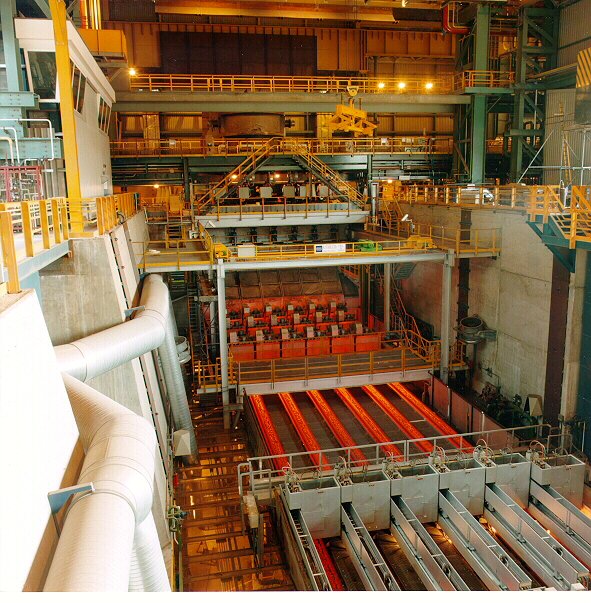
Semi-finished steel leaving the continuous caster
Further reading
- Steel Designers' Manual 7th Edition. Editors B Davison & G W Owens. The Steel Construction Institute 2012, Chapter 10, Applied metallurgy of steel