
Structural Steel Design Awards 2021 - Merit
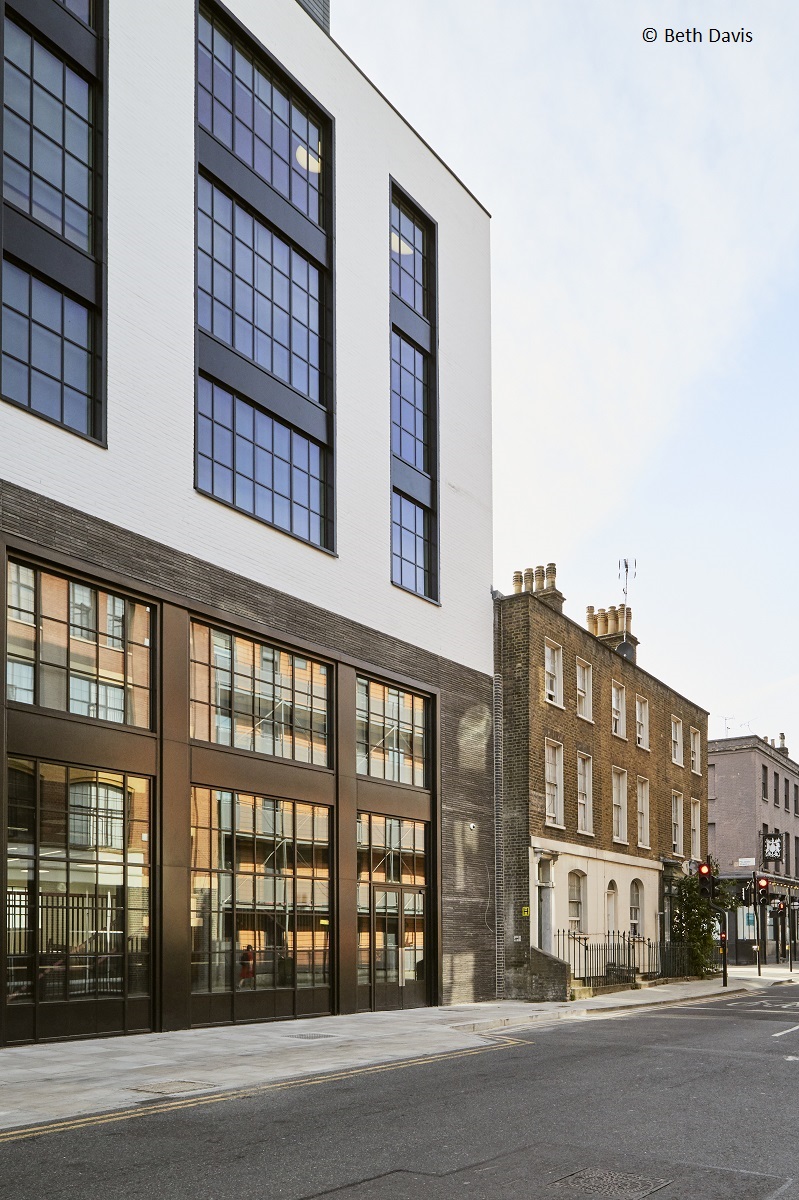
To suit the new layout, the building’s existing cores were remodelled and repositioned, providing a single primary core for the unified building and creating open-plan spaces suited to a range of new tenants. The existing mansard roof provided poor office space, with limited natural daylight due to small windows, so this was removed to facilitate the new two-storey vertical extension, which has created fully functioning, modern upper floor space. The impact on the streetscape has been reduced by setting the floors back from Shepherdess Walk and the northern and western elevations.
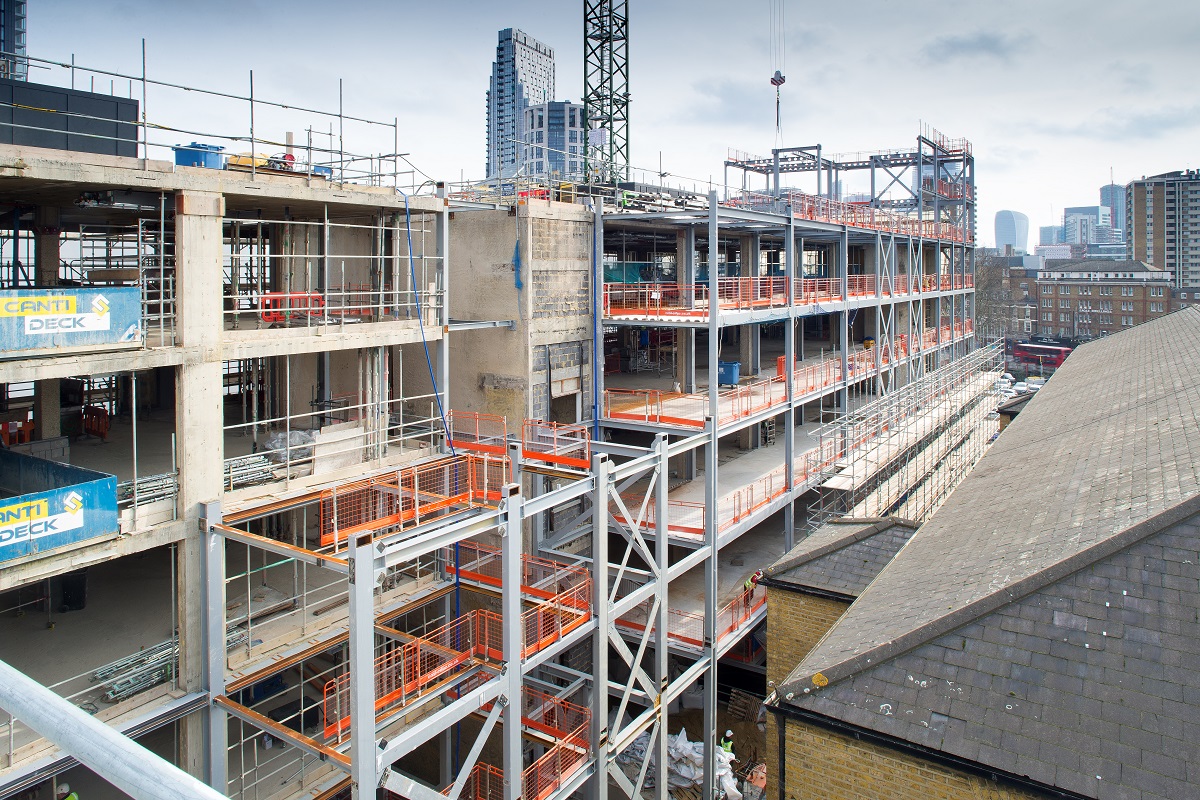
The new lightweight steel frame minimised the strengthening works required on the original structure and existing foundations to carry the loads from the additional storeys.
The design celebrates the building’s industrial heritage through exposing the existing reinforced concrete (RC) slabs and columns on the lower floors, along with the steelwork in the new areas. Occupiers can see first-hand how the historic building structure has been opened out using steel. The framing has an honesty to it; columns and beams are placed where needed to suit the history of the building, resulting in a more sustainable offering than could have been achieved through demolition. Sustainability was a key aspect of the building’s redevelopment. Reusing the existing RC frame has saved approximately 2,450 tonnes of CO2.
|
'Architect' |
Buckley Gray Yeoman |
|
'Structural Engineer' |
Heyne Tillett Steel |
|
'Steelwork Contractor' |
Billington Structures Ltd |
|
'Main Contractor' |
Sir Robert McAlpine |
|
'Client' |
Stanhope PLC |
Judges' comment
A good example of sustainable construction. By using steel to open up an existing building, extend it upwards and outwards with a lightweight frame, this 1980’s concrete office building has been repurposed with a 40% increase in floor area and greater flexibility. Reusing the existing frame and foundations saved 2,450 tonnes of embodied carbon compared with building new.