
1-4 Marble Arch, London
Retain and rebuild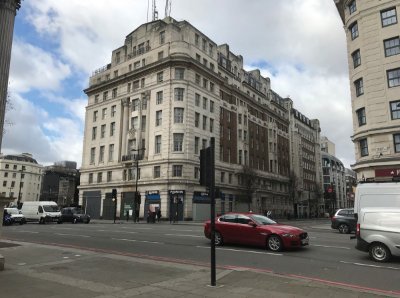
Protecting the capital’s historic streetscape and buildings is always uppermost in planning departments' and developers' minds when a new scheme is in the offing. The march of progress cannot be halted and so one solution to the conundrum of accommodating modern and up-to-date buildings within a listed or much-loved street, is to retain facades and construct a new structure behind. This solution has been successfully used throughout central London as well as other parts of the UK. It is a popular method, as once the construction project hoardings are removed, the general public see the same building elevations, pretty much as they were before building work commenced. The streetscape will have been preserved, but within the retained façade a new modern interior will have upgraded the address.
An ongoing example of this kind of work is 1-4 Marble Arch, which is a £55M central London rebuild project designed by leading architect AHMM. “This is a key project for an important client, and follows are successful completion of a similar project in the vicinity,” says Galliford Try Senior Project Manager Barry Kingscote. The nine-storey building, originally built in the 1920s, sits directly opposite the Marble Arch monument, in the heart of London’s West End. The project will see the existing façade retained from street level up to level six, while behind it a full demolition and a steel-framed rebuild is taking place. This will create three floors of retail space and above this a further seven floors of high-quality Category A office space.
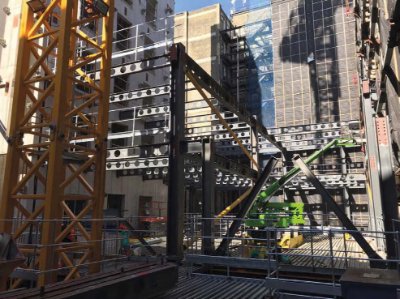
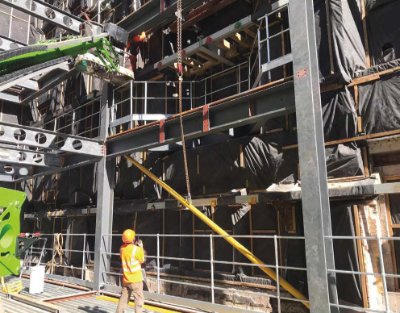
The top levels of the façade were removed during the demolition programme and will be replaced with new stone-clad elevations that will match and complement the retained parts. Within the retained façade, new fenestrations will be added that consist of slimline steel windows. One of the more complex parts of the project’s work, involves the ground and first floor parts of the retained facades. These are being demolished, while the structure above is fully-supported by the retention system, and replaced with new stonework and larger steel-framed shopfronts (see below).
Main contractor Galliford Try began onsite in 2019 and once demolition was complete, the temporary retention system in place and the existing basement enlarged into a two-level subterranean area, they and Bourne Steel were able to get the steelwork erection programme underway.
The new steel frame begins at the upper basement level, but the main columns are founded below this on the lowest concrete slab. Based around a regular column grid pattern of 6.5m × 9m and stabilised by a single concrete core, the steel frame supports metal decking with a concrete topping to create a composite flooring solution for the new 10-storey building.
New steelwork connects to the retained façade steel columns via bolted connections and once complete, the new frame will support the old structure. “They are two separate structures; the steel frame is founded on new raft foundations, while the façade is on pad foundations. So, in order to accommodate any differential movement, they are joined by a sliding connection,” explains Mr Kingscote.
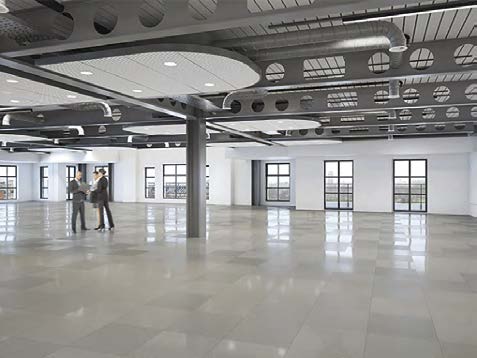
The majority of the structure’s steel beams are fabricated plate girders with bespoke cells to accommodate the building’s services within their depth. “The soffits will all be left exposed within the completed building, along with the steelwork,” explains Bourne Steel Project Manager Duncan Wyatt. “Consequently, we have applied a decorative intumescent paint finish to the beams and columns at our fabrication workshop. This has cut down onsite works, as we only have to repaint the connections and any knocks and scratches.”
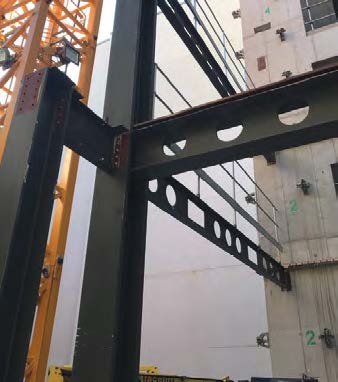
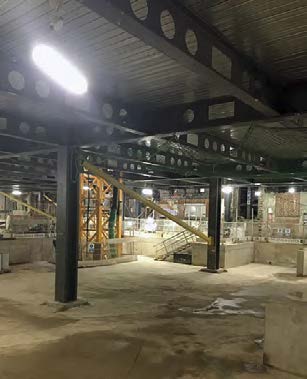
The exposed interior of the office floors gives the building a modern and ‘industrial-looking' environment. Flexibility is also at the heart of the steel-framed design, as each office floor can be occupied by a single tenant, or sub-divided into two. Flexibility also extends to level one, which has been initially designed as the upper retail floor, but can be changed into office space.
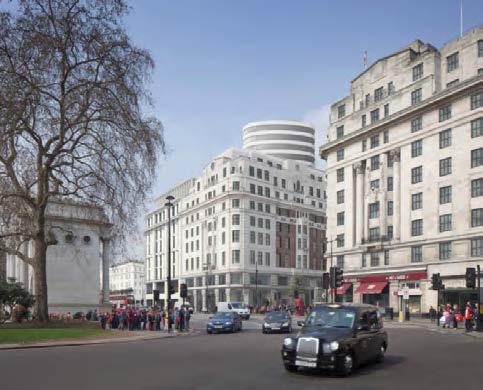
Adding some irregularity to the new steel frame, there are set-backs on each of the floors that are above the retained façade. Transfer beams are located on floors six, seven and eight in order to support the irregularly-positioned columns that help create the three steps in the building.
1-4 Marble Arch is due to complete in early 2022.
Façade retention system
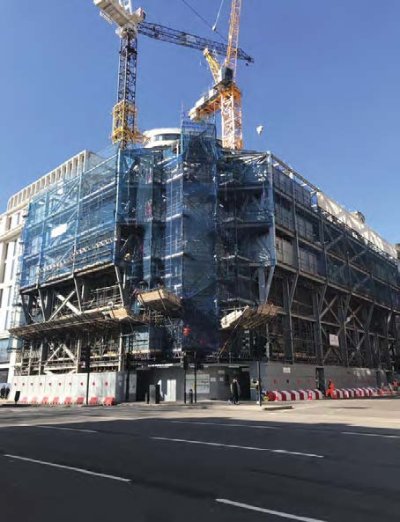
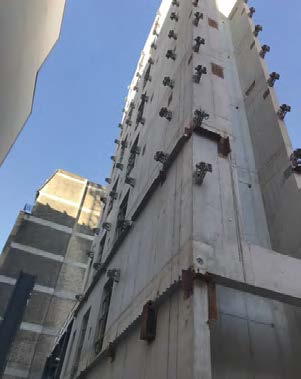
“Once the main steel frame was completed, we inserted a series of steel needles (beams) through the façade to connect it to the retention system and second floor slab level,” explains Galliford Try Senior Project Manager Barry Kingscote. “They support the structure above and allow the lower part of the façade to be removed. We will then install new steel-framed windows and shopfronts.” The needles remain in place once the work is complete, but their connection to the retention system is temporary. The installed shopfront steelwork is quite substantial as some support columns above. Weighing up to 4t and with a maximum length of 6m, the window frames are fabricated from 400mm x 400mm box sections.
The challenges of combining existing and new structures
By David Brown of the SCI.
The second practical issue is to allow for the inevitable differences in position and level by making provision for adjustment in the connections between the existing and new. This may be as simple as detailing packing between elements, or by using slotted holes and preloaded assemblies, but adjustment is likely to be essential. The Marble Arch project involves bolted connections between the existing frame and the new steelwork, which may often be preferable to site welding. Bolting obviously involves site drilling, but avoids the analysis of the existing material, joint preparation and access issues associated with welding. Connection designers should note that thick packs reduce the shear resistance of bolts – as given by clause 3.6.1(12) of BS EN 1993-1-8[1].
The significance of differential settlement is also highlighted by the Marble Arch project. Any settlement of the façade will have taken place a long time ago, but the new raft foundations may settle over time, as the loading increases during the construction phase. Sliding joints have been provided, which also demand careful detailing. In combination with slots, so-called ‘shoulder bolts’ may be used, which have a part-threaded shank and an unthreaded length of a larger diameter. The nut can be tightened down to the ‘shoulder’ which is slightly longer than the plies to be joined, meaning the two plates can move relative to each other, but not separate.
In addition to the guidance in the BCSA Handbook, SCI publication P138[2] offers practical advice on appraisal, structural assessment, strengthening methods and corrosion protection when dealing with existing iron and steel structures.