
Tate Modern, London
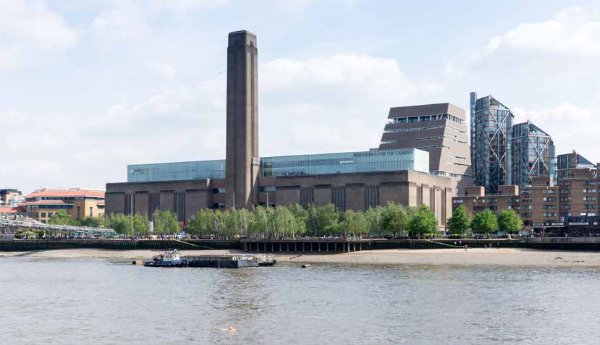
Structural steelwork has exhibited its long span qualities in creating the large gallery spaces for the recently opened Tate Modern extension.
Proclaimed as the most important cultural building to open in the UK for almost 20 years, the Tate Modern extension, known as the Switch House has thrown open its doors to the public. Designed by architects Herzog & de Meuron, who also designed the original conversion of the Bankside Power Station in 2000 into the original Tate Modern, the new structure has added 60% more space to the museum. Tate Director Nicholas Serota says: “This is a landmark not only for Tate and London but also for the UK as a whole. The opening signals a new era for modern and contemporary art in the UK.”
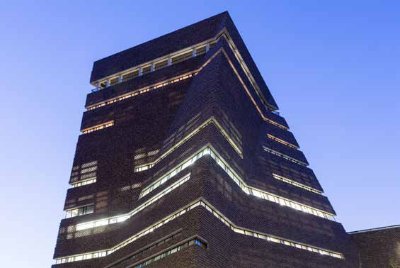
The Switch House arranges the museum’s new spaces into a unique pyramid-shaped tower, standing 64.5m-high, with its outer structure folding into dramatic lines as it rises. Said to be reinterpreting the power station’s brickwork in a radical new way, it is clad in a perforated lattice of 336,000 bricks. This unique façade is said to allow light to filter in during the day and to glow out in the evening, transforming a solid, massive material into a veil that covers the skeleton of the new building.
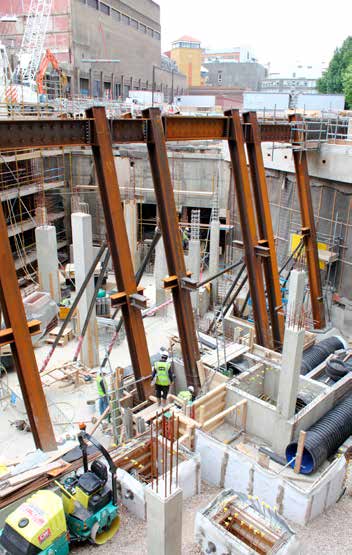
The 10-storey Switch House has been designed as a hybrid structure with both steel and concrete-framed elements. A total of 1,000t of structural steelwork was fabricated, supplied and erected for the project by Bourne Steel during phase one and then Severfield during phase two.
For Phase one the western oil tank steelwork was erected forming the footprint of the tower structure, including raking columns and ground floor transfer beams weighing 1,200kg/m. Also as part of the phase one works, Bourne Steel installed all of the steelwork to strengthen the existing ground slab within the original Switch House and new steelwork up to ground level.
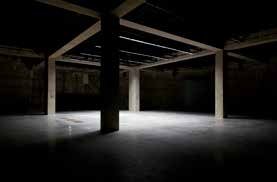
The steel element does not encompass the entire footprint of the Switch House extension, it shares the area with the adjacent concrete-framed tower. At fifth floor level, the steelwork actually supports the entire northern façade of the tower. “The steel frame is formed with a series of large 1,200mm-deep fabricated beams spanning up to 18m,” explains Ramboll Project Director Martin Burden. “The large beams were needed not just as transfer structures for the fourth floor roof which supports the façade, but also to support the gallery floors that will have some heavy exhibits to accommodate.” Working in the same way as cellular beams, all of the fabricated girders have large openings to accept services within their depth.
To support the sloping northern elevation of the tower, a 1.2m-deep steel spreader beam weighing 1,000kg/m was installed at level five. This beam distributes the loads from the perimeter structure and façade above into the level five roof beams, which, in turn, transfer the load to the core and northern Switch House columns.
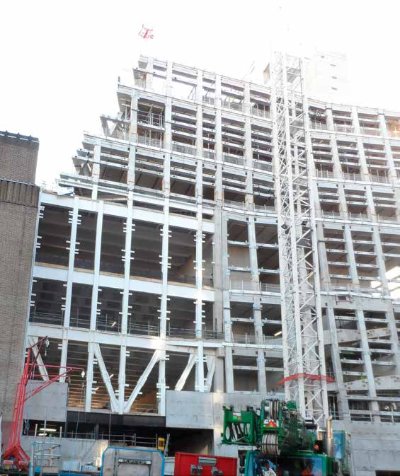
To achieve the tolerances required for installation of the glazing and brickwork it was essential that the deflection of the structural frame at the perimeter of the Switch House building was limited. “Although complicated by the geometry of the tower and the various types of transfer structures, deflection limits of 1 in 1000 were achieved,” adds Mr Burden.
Summing up, Mayor of London Sadiq Khan says: “I’m delighted that the Tate Modern’s extraordinary new extension is now open. The Tate is an incredible success story, attracting millions of Londoners and visitors from all over the world and it is a shining example of the capital’s status as a global leader in the arts.