
Structural Steel Design Awards 2021 - Award
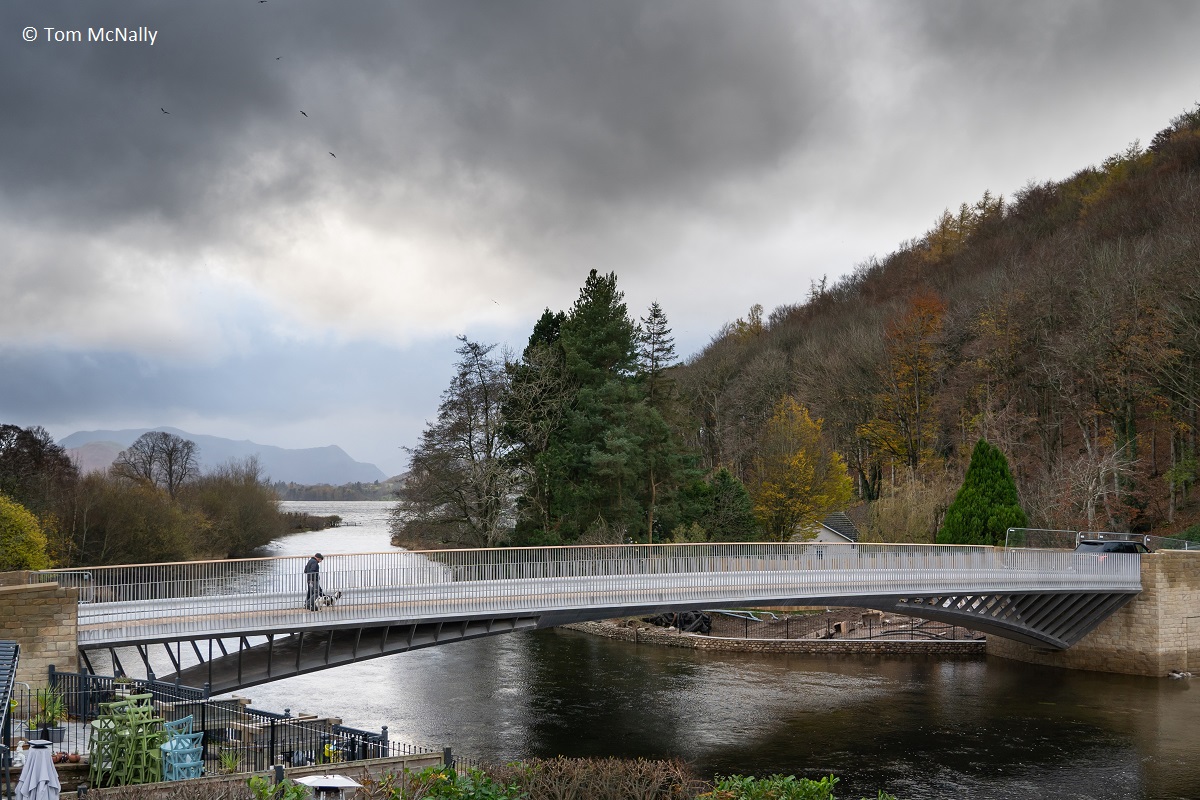
The first stage in the project for a permanent replacement required the development of a concept design for the new bridge and stakeholder engagement. The objective was to conceive a flood-resilient and future-proof bridge, complying with the current technical standards and the Environment Agency (EA) regulations, that met the local community’s common aspiration for a high-quality new crossing.
The new bridge is an exceptionally slender 40m-span open-spandrel arch with an innovative composite stainless steel and high strength concrete structure that emerges from local sandstone-clad reinforced concrete abutments. The single clear span minimises environmental impact and flood risk.
Being the first stainless steel road bridge in the UK, it is unique in terms of the materials used, how they are combined, and the structural layout, with 7.5m-long hidden back-spans within the abutments to transfer the horizontal component of the arch compression to the deck. This provides a traditional deck-arch appearance, but without transferring horizontal reactions to a low-capacity ground. Other innovative solutions used in the design and construction included a movement joint system that allowed movements in three different directions, very large 2.8-tonne link bearings, casting Converge sensors into the concrete for monitoring strength gain, which was a critical parameter before lifting, and laser scanning of the steelwork after site assembly to make sure it would fit perfectly.
The slender design made possible by the high strength stainless steel minimized the amount material used and the associated embodied CO2 content. The specific type of steel used has 20% of the embodied carbon of the global average of stainless steel, due to using 85% recycled content and low-carbon energy at production sites.
The construction of the bridge was constrained by environmental and economic aspects: it should happen out of the salmon spawning season to fulfil the EA requirements, but without interfering with the tourist season to avoid impacting local businesses. These constraints left no appropriate window for construction, prevented the building of temporary supports in the riverbed, required a temporary crossing for pedestrians and services to maintain access to the village, and encouraged maximising offsite construction. Using steel as part of the structure was fundamental to the solution.
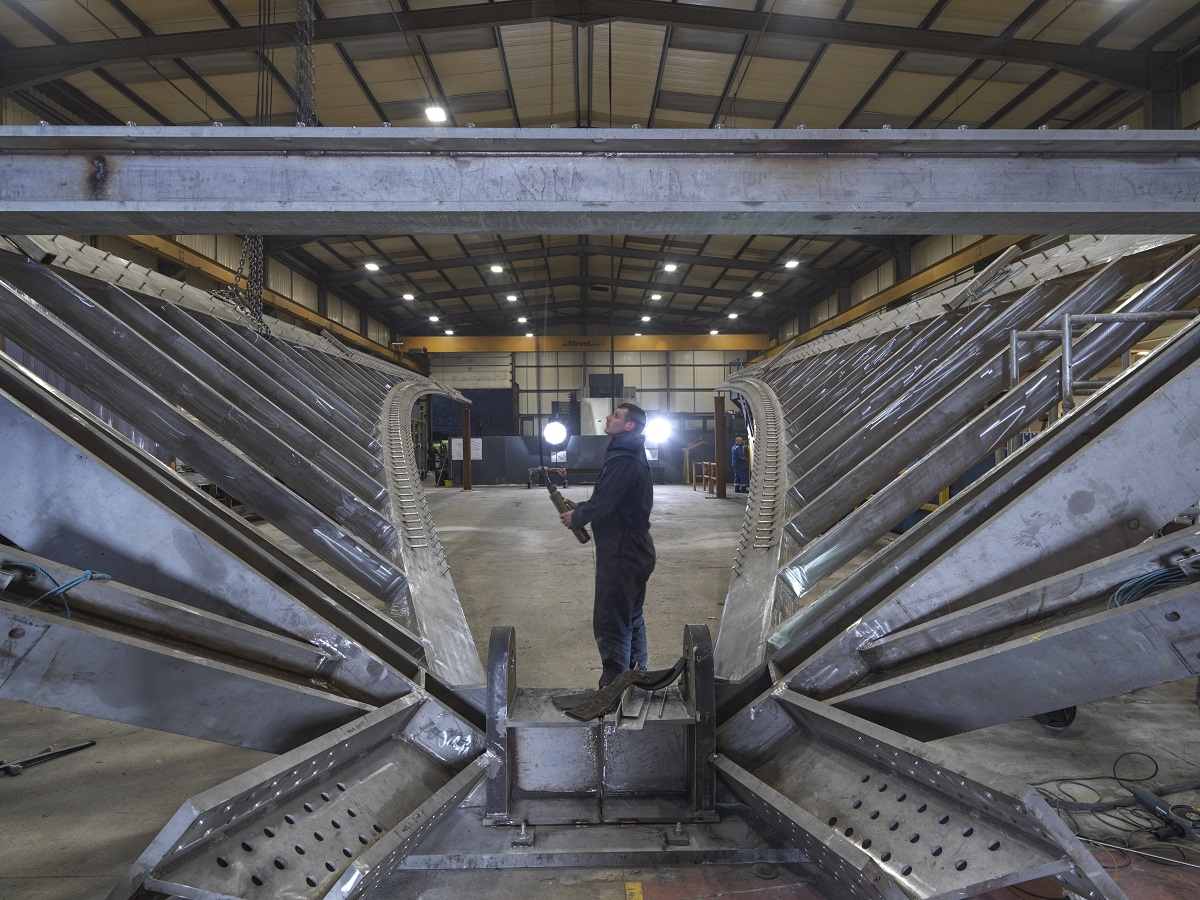
The 110-tonne steelwork, all made up of bespoke sections, was fabricated in four quarters, taking approximately 22,000 man-hours and considerable expertise to complete. A jig was created to mount the sections, allowing work to be completed simultaneously throughout different areas of the structure. 1,920 shear studs were machined from stainless steel bars and welded to the inner surfaces of arch and deck to form the steel-concrete composite connection.
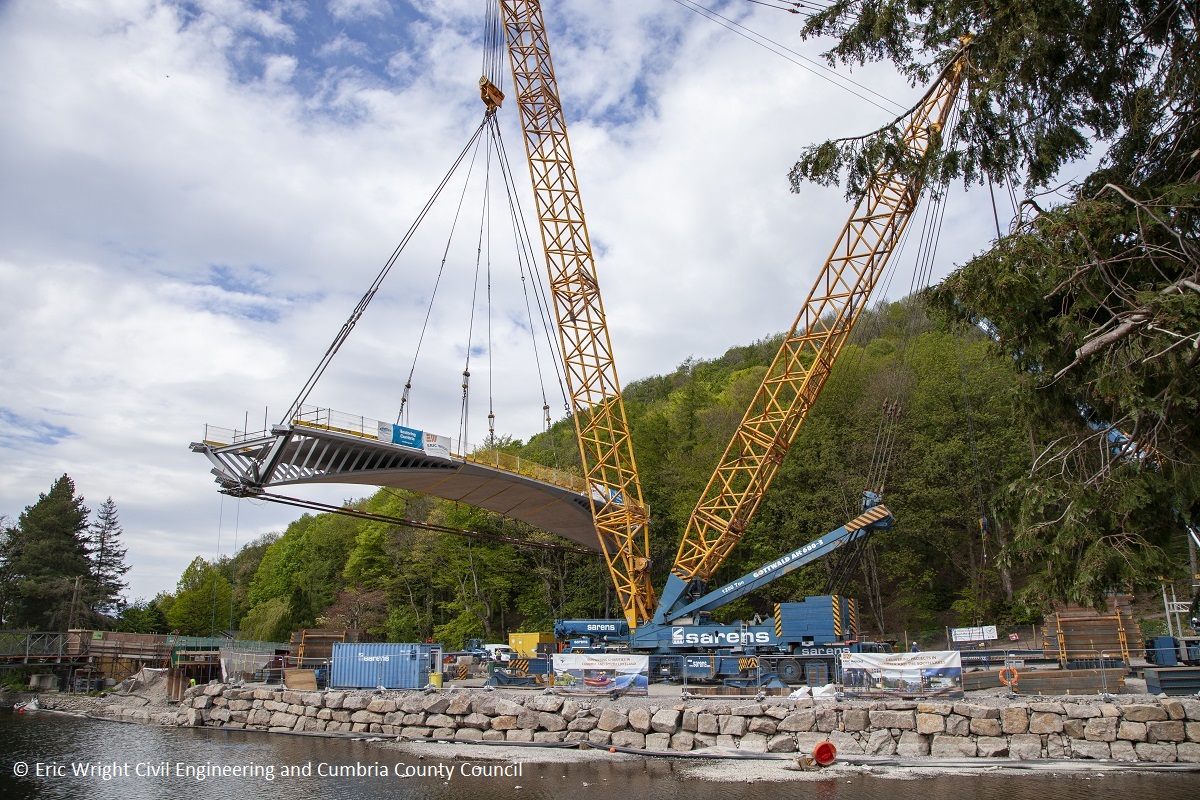
The installation of the 290-tonne main span of the bridge required a 1,350-tonne mobile crane, one of the largest in the UK. Transport of its parts through the narrow Lakeland roads and assembly in a very limited working area were additional challenges. After the lift, the back-spans were installed inside the abutments, the temporary ties linking the arch springings were removed, and the concrete part of the deck was poured to complete the permanent structural system. Finishes include sandstone pavers, granite Trief kerbs, and a stainless steel and Cumaru timber railing. Ducts were placed within the pavement section, so services along the bridge are invisible.
|
Architect |
Knight Architects |
|
Structural Engineer |
GHD |
|
Main Contractor |
Eric Wright Civil Engineering |
|
Client |
Cumbria County Council |
Judges' comment
Ingenuity, innovation and beauty combine in this remarkable replacement for the Grade-II listed stone bridge swept away by floods in 2015. The UK’s first structural stainless steel road bridge, the solution utilises expertly fabricated high strength low nickel alloys to achieve a low maintenance and highly efficient structure. Striking contemporary design in the heart of the National Park.